
Short answer
A sudden high water bill usually means a hidden leak, a running toilet, or a meter error. Check the meter first — it shows in minutes whether water is escaping.
First, check the bill itself — dollars or gallons?
Before you look for a leak, look at the bill. The number that matters is the usage — usually shown in gallons or CCF (one CCF is 100 cubic feet, about 748 gallons) — not the dollar total. If the usage is about the same as last month but the total is higher, the cause is probably a rate increase, a longer billing period, or a one-time fee, not a plumbing problem.
Compare the current bill with the last two or three. Note three things: the usage figure, the number of days in the billing period, and whether the read was marked "actual" or "estimated." A bill that covers 35 days will naturally be higher than one covering 28, and an estimated read that gets corrected the next month can make one bill look huge and the next one look tiny. If the usage jumped sharply while the days stayed the same, something in the house is using — or losing — more water.
The two-minute meter test
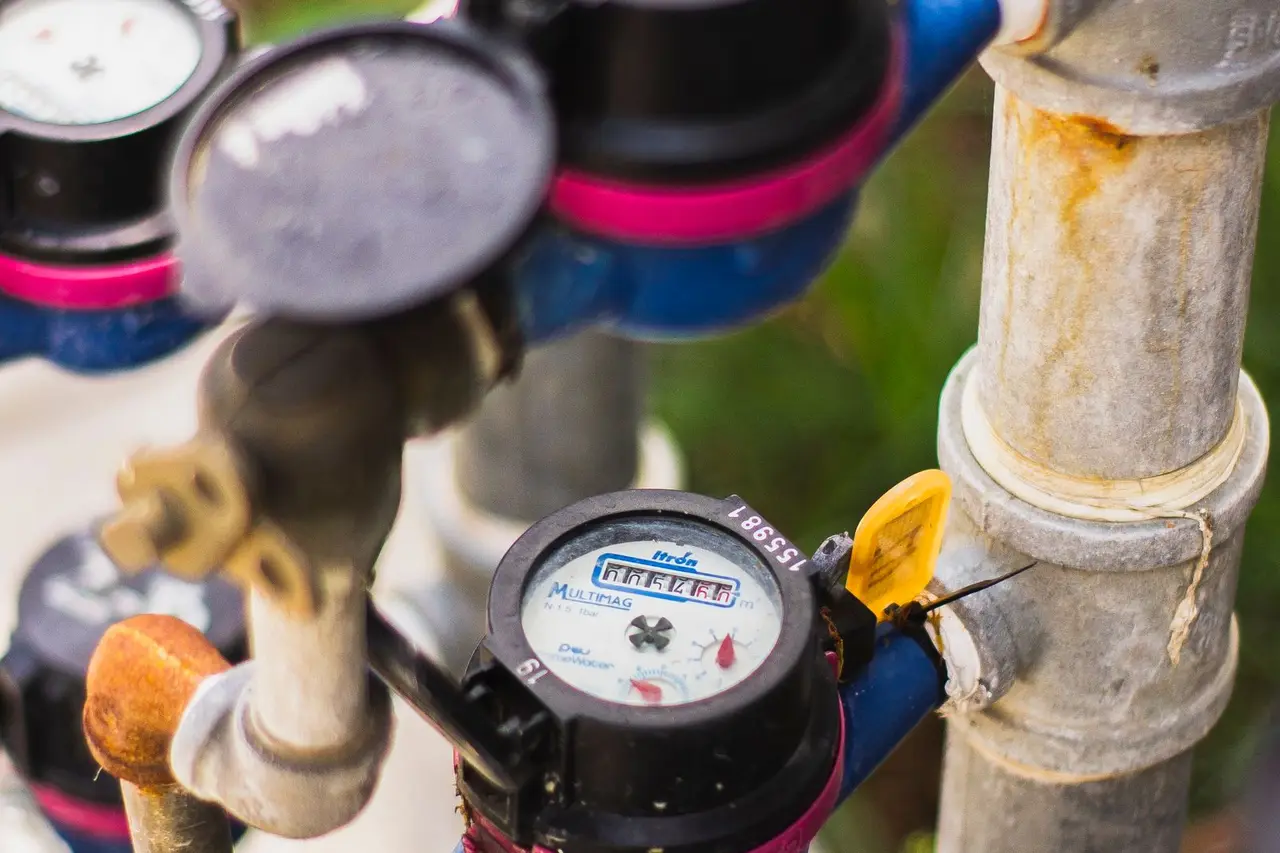
The fastest way to tell whether the extra water is actually leaving your pipes is the meter test. Find your water meter — usually near the street in a ground-level box, or in the basement where the main line enters the house — and lift the cover. Most residential meters have an odometer-style dial plus a small low-flow indicator: a little triangle, star, or spinning dial that moves with even a trickle of flow.
Turn off every tap, toilet, appliance, and irrigation zone in the house, and make sure nothing is running — no dishwasher, no washing machine, no ice maker filling. Then watch the low-flow indicator for two minutes. If it is not moving at all, no water is flowing through the meter, which means there is no active leak on your side of it. If it creeps or spins while everything is off, water is escaping somewhere, and the rest of this guide is about finding where.
While you are there, write down the meter reading. Take a second reading the next morning before anyone uses water, or after two hours with everything off. Any increase with zero use is water lost — and the size of the increase tells you how fast it is going.
Cause 1: a silent toilet leak
The single most common cause of a mysteriously high water bill is a toilet that leaks silently from the tank into the bowl. The flapper — the rubber seal at the bottom of the tank — wears out over time, and when it no longer seals, water trickles into the bowl around the clock. There is no puddle, no noise, and no visible sign, which is why it can run for weeks before the bill gives it away.
The dye test takes five minutes and costs nothing. Put a few drops of food coloring (or a dye tablet) into the toilet tank, do not flush, and wait 15 to 30 minutes. If color shows up in the bowl, the flapper is leaking and the tank is refilling itself all day. Replacing a flapper is a cheap, straightforward fix — it usually just unhooks from two pegs and clips back on — but if the fill valve is also running, or the water level in the tank sits above the overflow tube, the whole fill assembly may need attention.
According to the U.S. Environmental Protection Agency's WaterSense program, a leaking toilet can waste more than 200 gallons of water a day. At that rate, one bad flapper can add thousands of gallons to a single billing period — often enough to explain the entire jump on its own. Check every toilet in the house, including the guest bathroom nobody uses.
Cause 2: a hidden leak inside the house
If the meter test shows water moving with everything off and the toilets check out, the leak is somewhere you cannot see. Pipes run inside walls, under floors, and beneath concrete slabs, and a slow leak in any of them can waste a surprising amount of water before it shows a stain. The classic clues are a warm spot on the floor, a damp or musty patch on a wall or ceiling, the sound of running water when nothing is on, or a water heater that cycles more often than it used to.
Also check the places that leak quietly without ever reaching a floor: the water heater's temperature-and-pressure relief valve (look for a drip from its discharge pipe), the supply lines behind the washing machine and dishwasher, the ice-maker line behind the fridge, and the shutoff valves under sinks. A small, steady drip in any of these can add up to hundreds of gallons over a month.
For the full step-by-step on tracking a leak you cannot see — including the meter test in more detail and when to call in electronic leak detection — see our guide on finding a hidden water leak. Do not open walls or break up flooring yourself to chase a leak; once you have narrowed it to a hidden pipe, a plumber with acoustic or thermal detection equipment will find it faster and with far less damage.
Cause 3: an outdoor or irrigation leak
Outdoor leaks are easy to miss because the water disappears into the ground. A sprinkler zone with a cracked pipe or a stuck valve can dump hundreds of gallons in a single cycle, and a timer that got reset — after a power outage, a battery change, or someone fiddling with the controller — can quietly double your watering schedule. Check the controller's run times, and walk the yard while a zone runs: look for soggy patches, unusually green strips of grass, or water pooling where it should not.
Do not forget the simple outdoor fixtures. A hose bibb left cracked open, a garden hose with a split, a dripping outdoor faucet, or a pool or hot tub autofill valve that sticks open can all run unnoticed for weeks. If the house has a separate irrigation meter, read it the same way as the house meter — with the system off, the low-flow indicator should be still. A leak in the buried line between the meter and the house is also possible; if the meter runs with the house shutoff valve closed, the problem is in that line.
Cause 4: more water use than you think
Not every high bill is a leak. Sometimes the usage is real, and the cause is a change in the household. House guests, a family member home from college, a new baby, or a relative staying for a few weeks all push daily use up — more showers, more laundry, more flushes. A new appliance can do the same: an older washing machine uses far more water per load than a modern one, and a new dishwasher or water softener adds cycles you did not have before.
Seasonal habits matter too. Filling a pool or hot tub, watering a new lawn or garden, washing cars more often in summer, or running a sprinkler system that was off all winter can all show up as a sudden jump. Before assuming the worst, ask everyone in the house what changed in the last month — the answer is often simpler than a leak, and it costs nothing to check.
Cause 5: a meter or billing mistake
Meters are mechanical devices, and billing involves people reading them. A misread digit, a transposed number, or a meter that was replaced and started at a different baseline can all produce a bill that does not match reality. Estimated reads are the most common culprit: if the utility could not reach your meter, it bills an estimate, and the next actual read corrects the difference all at once — which can look like a sudden spike.
If your own meter readings do not match the bill, take a photo of the meter dial with the date and call the utility. Ask whether the read was estimated, whether the rate changed, and whether a new meter was installed recently. Most utilities will re-read the meter or adjust the bill if the numbers do not add up — but they will want your reading as evidence, so keep the photo and the two readings you took during the meter test.
When to call a plumber — and what to have ready
Call a plumber promptly if the meter keeps moving with everything in the house shut off, if the bill keeps climbing month after month, or if you find any of the warning signs of a hidden leak: wet spots, a musty smell, a warm floor, the sound of running water behind a wall, or a water heater that never seems to stop. A leak that wastes water every hour does not fix itself, and the longer it runs, the higher the bill — and the greater the chance of water damage.
A few facts ready on the phone call help the plumber judge the job before arriving. Note your meter readings and how much the reading moved with everything off, which toilets passed or failed the dye test, whether the usage jump matches the billing period or the rate, and any wet spots, sounds, or smells you found. Mention any recent work — a new fixture, an irrigation repair, or a meter replacement — and whether the bill changed right after it. If you already tried the meter test or the dye test, say so, and what each one showed.
- Your two meter readings, and how much the reading moved with everything off.
- Which toilets passed or failed the dye test.
- Whether the usage or just the dollar total jumped — and the billing period length.
- Any wet spots, warm floors, musty smells, or sounds of running water.
- Any recent changes: guests, new appliances, irrigation work, or a meter swap.